
How to plan an effective QR code promotion in store
Objective, location, game rules, prizes and content: a practical method for integrating a QR code activation into the customer journey with SanGame.
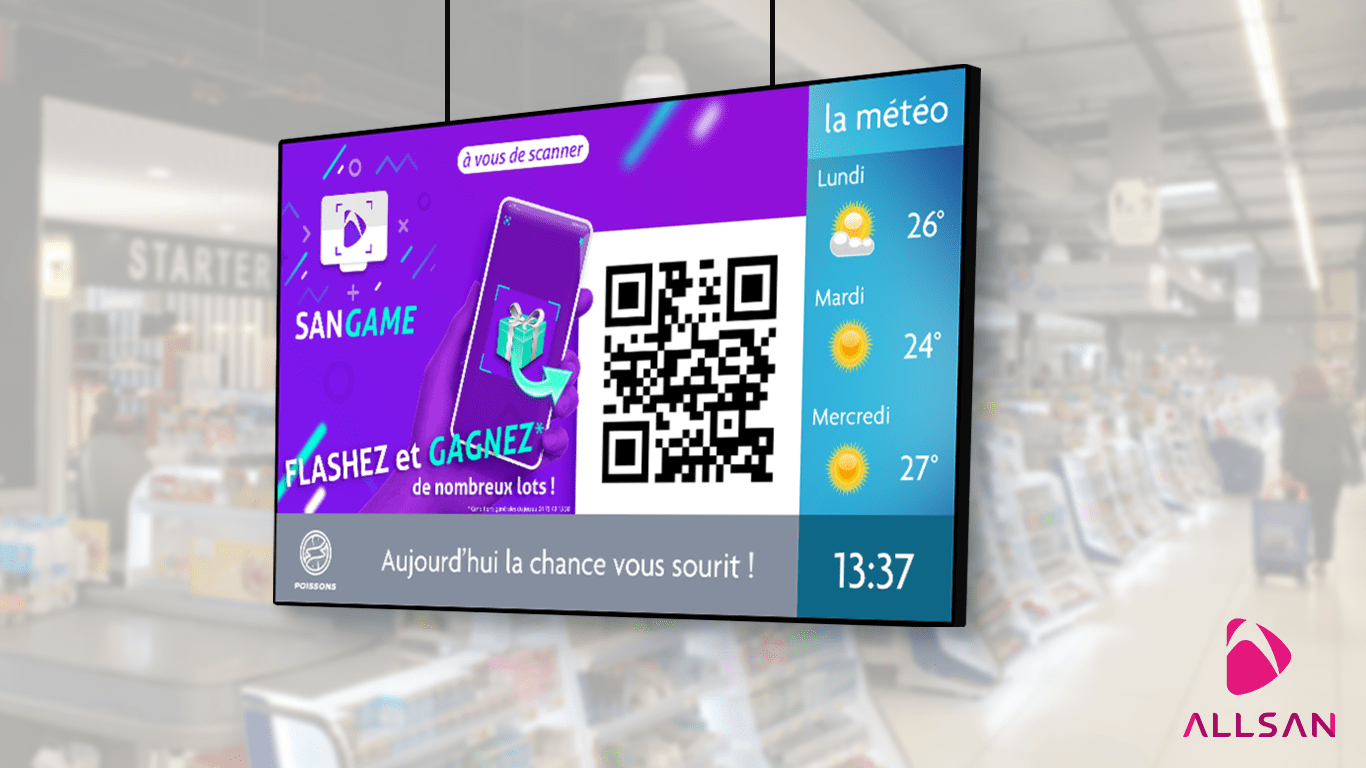
An in-store QR code promotion involves much more than placing a square on a screen. To encourage participation, it must be instantly understandable, visible in the right place and suited to the amount of time customers have available. Success therefore depends as much on the scenario as on its integration into the retail environment.
With SanGame, visitors scan a QR code displayed on a digital signage screen and take part on their smartphone. The screen can show the progress or result of the game. This connection between a shared display and a personal phone turns conventional communication into a participatory experience.
Start with one precise operational objective
Before selecting artwork or a game mechanic, define the purpose of the activation. Is it intended to enliven a sales period, support an event, run a game with prizes or simply give customers another reason to look at the screen? one primary objective makes decisions easier and prevents the journey from becoming overloaded with competing messages.
That objective must relate to a real situation in the store. An activation at the entrance does not serve the same context as a game in a promotional area or near a waiting zone. At the entrance, the message needs to be understood while people are moving. Where visitors spend more time, the scenario can include slightly more explanation.
Build an unambiguous participation journey
Customers should understand within moments what they can do and what will happen after the scan. A good call to action combines a clear instruction, an identifiable proposition and an indication of the next step. essential rules should be accessible before participation, particularly when prizes form part of the promotion.
- Capture attention with an animation that remains readable from the actual passing distance.
- Explain the expected action in one sentence: scan the QR code to take part.
- Keep the QR code on screen long enough for visitors to take out their phone.
- Maintain visual continuity between the screen, smartphone experience and result.
- Provide a clear ending: game completion, result and any appropriate next step.
Simplicity does not make an activation ordinary. It means removing unnecessary effort. Too many instructions, small text or intermediate stages can discourage visitors before they scan. Content creation should therefore be based on real usage rather than focused solely on producing an attractive visual.
Choose the display and location around customer behaviour
The display is the visible starting point of the activation. Its orientation, size, brightness and viewing distance must suit the environment. The QR code needs to remain sharp and accessible without forcing participants to obstruct circulation. The choice and positioning of professional displays should therefore be considered alongside the scenario.
- Store entrance: use a brief message and avoid causing people to stop in the main flow.
- Promotional area: connect the activation directly to the relevant theme or event.
- Waiting zone: use the available time while keeping instructions concise.
- Customer-journey display: check that the distance and angle allow comfortable viewing and scanning.
Prepare store operations before launch
An interactive activation involves several responsibilities. Marketing defines the objective and campaign identity. The content team prepares the on-screen messages. Store operations check positioning, customer flow and the clarity of the instructions. If a game includes prizes, the applicable rules and the process for awarding them must also be organised in advance.
Test the complete journey under real conditions: approaching the display, reading the message, scanning, viewing the experience on different smartphone formats, understanding the result and returning to the shopping journey. This often reveals details that a design file cannot show, such as a QR code that disappears too quickly, weak contrast or instructions positioned too low.
Connect the game to consistent store communication
The activation should not operate in isolation. It can be announced on another screen, reinforced in the relevant area and supported by staff when customers ask questions. Within an in-store digital signage project, the game invitation must not become lost in an overcrowded playlist or appear at an unsuitable time.
Once the activation is live, observation in the store remains essential. Do visitors notice the invitation? Do they understand that they need their phone? Can they scan without hesitation or obstructing others? These observations can guide changes to the message, display duration, location or instructions.
Checklist before going live
- The commercial objective and intended audience are clearly stated.
- The mechanic can be understood without mandatory verbal assistance.
- The QR code is visible, stable and tested from the customer’s position.
- The display and smartphone content share the same visual cues.
- Store teams understand the process and can answer essential questions.
- The end date and removal of campaign content have been planned.
Make interaction a useful moment
A QR code activation works when it respects the visitor’s context: limited time, numerous stimuli and a need for clarity. SanGame provides the interactive link between the display and smartphone; the quality of the experience then depends on the scenario, content, positioning and store organisation.
Planning an in-store promotion? Contact ALLSAN with your objective, proposed location and intended journey to explore a suitable SanGame activation.