Multilingual visitor information: how should updates be managed?
A practical method for keeping visitor information consistent across languages, screens, reception points and digital wayfinding systems.
In a tourist information centre, museum, cultural venue or public facility, translating information is only part of the task. Opening times, access details, services, instructions and directions must also remain consistent in every language and across every channel. Otherwise, even a minor operational change can create several conflicting versions.
The real challenge is therefore to manage the information lifecycle rather than continually produce more messages. Digital signage can simplify distribution, but reliability begins with the sources, responsibilities and update rules established by the organisation.
Identify which information actually changes
Not every item requires the same level of monitoring. A building name or general map may remain valid for years, while opening times, closures, events, access conditions and disruptions can change daily. Separating these categories prevents the entire visitor journey from being subjected to an unnecessarily complex approval process.
An initial inventory can classify information by location, audience, language, channel, update frequency and priority. It should cover welcome screens, kiosks, resources used by reception staff and, where applicable, answers delivered through a conversational system.
- Stable information: space names, permanent services, general rules and main routes.
- Scheduled information: exhibitions, activities, seasonal hours and temporary programmes.
- Reactive information: unexpected closures, unavailable entrances, room changes or disruptions.
- Critical messages: evacuation instructions, restricted access or other notices requiring immediate publication under the venue’s procedures.
Create a reference source before translating
Translation should begin with an identified reference text, not an old screenshot or a document retrieved from an email thread. Each useful item should have an owner, validity period and status such as draft, approved, scheduled, published or withdrawn.
This structure distinguishes an editorial correction from an operational change. Communications staff may adjust wording, but announcing a new entrance, closure or exceptional timetable requires confirmation from the department responsible for that information.
Maintain a shared glossary
Building names, services, ticket types and landmarks must be translated consistently. A shared glossary reduces differences between screens, physical signs and explanations given by staff. For wayfinding, consistency is generally more useful than creative translation.
Match the approval process to urgency
One workflow cannot serve every type of message. A cultural campaign prepared weeks ahead can undergo complete review. A sudden closure needs a shorter procedure, a limited group of authorised publishers and templates that have already been approved.
- The operational department confirms the information, validity period and affected areas.
- The content manager prepares the reference version and selects the required languages.
- Translations are checked for context, available space and wayfinding terminology.
- Publication is scheduled and then verified on the intended screens or reception points.
- The message is removed or replaced when it expires so that outdated instructions do not remain visible.
Design screens for multiple languages
Displaying every translation simultaneously can quickly undermine readability. Depending on viewing time and location, it may be better to rotate languages, reserve one area for concise information or provide an interactive language choice. Immediate understanding of the primary message remains the priority.
Texts must also be tested in their real layouts. A longer translation may reduce the type size, hide a pictogram or make a sequence unnecessarily long. Place names and arrows should follow the same logic from one screen to the next.
Centralise distribution without removing local ownership
Across a network of venues, a central team can manage templates, terminology and shared information while each location controls its opening times, events and disruptions. Publishing rights should reflect this structure so that a local correction cannot accidentally affect the whole network.
SanDisplay enables teams to create, schedule, distribute and remotely supervise content across a screen network. In this setting, SanDisplay digital signage software can support centralised operations once editorial roles, languages and expiry rules have been clearly defined.
Connect screens, reception staff and conversational assistance
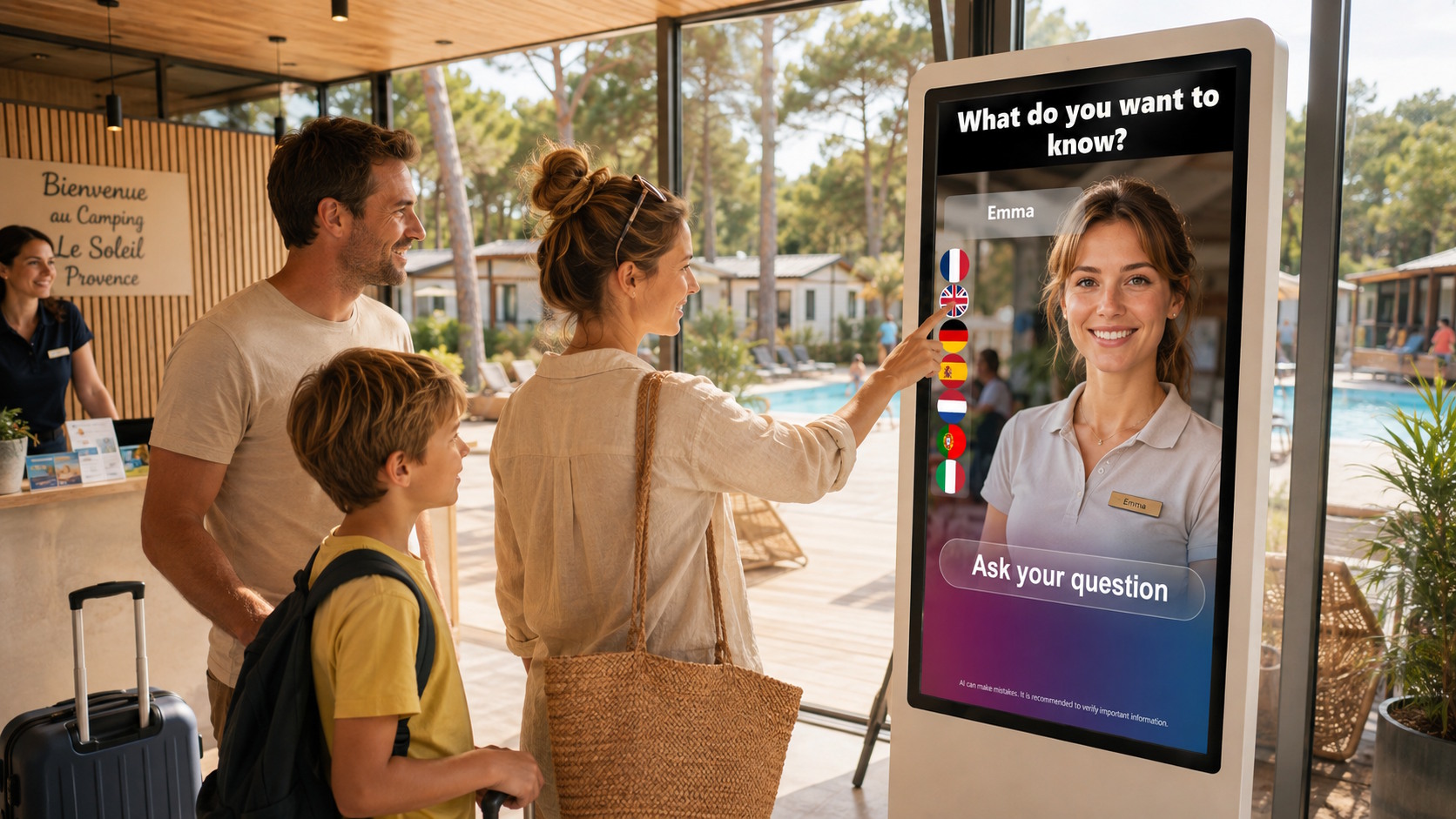
A shared screen answers common questions about opening times, the day’s programme, access or tour departures. Reception staff can then handle individual situations. A conversational system may complement this journey when visitors want to ask directly where to find a service or space.
SANIA welcomes, informs and guides visitors using content and services defined by the organisation. To maintain consistency, answers entrusted to this AI reception avatar should follow the same reference sources, approval rules and validity periods as other channels.
Audit the real visitor journey regularly
An audit should not merely confirm that a screen is switched on. Teams should walk through the venue as a visitor would: is the information visible at the right moment, understandable in every language and consistent with physical signs? This review is particularly useful when seasons, exhibitions, entrances or opening hours change.
A few operational indicators are enough to begin: content without expiry dates, translations awaiting approval, urgent messages published, discrepancies between channels and recurring questions received by staff. These reveal which information should be clarified or made more visible.
Build the operating model before adding technology
Reliable multilingual information depends on an identified source, consistent terminology, explicit responsibilities and an emergency-ready procedure. Technology can then accelerate publication and simplify supervision without replacing this essential organisational work.
Planning multilingual visitor services for one venue or a public-site network? Discuss your visitor journey and operating constraints with ALLSAN to explore a suitable approach.