
In-store retail media: who manages technology, content and advertising?
A retail media network needs more than screens. Learn how to divide responsibilities between the retailer, technology operator and advertising sales house.
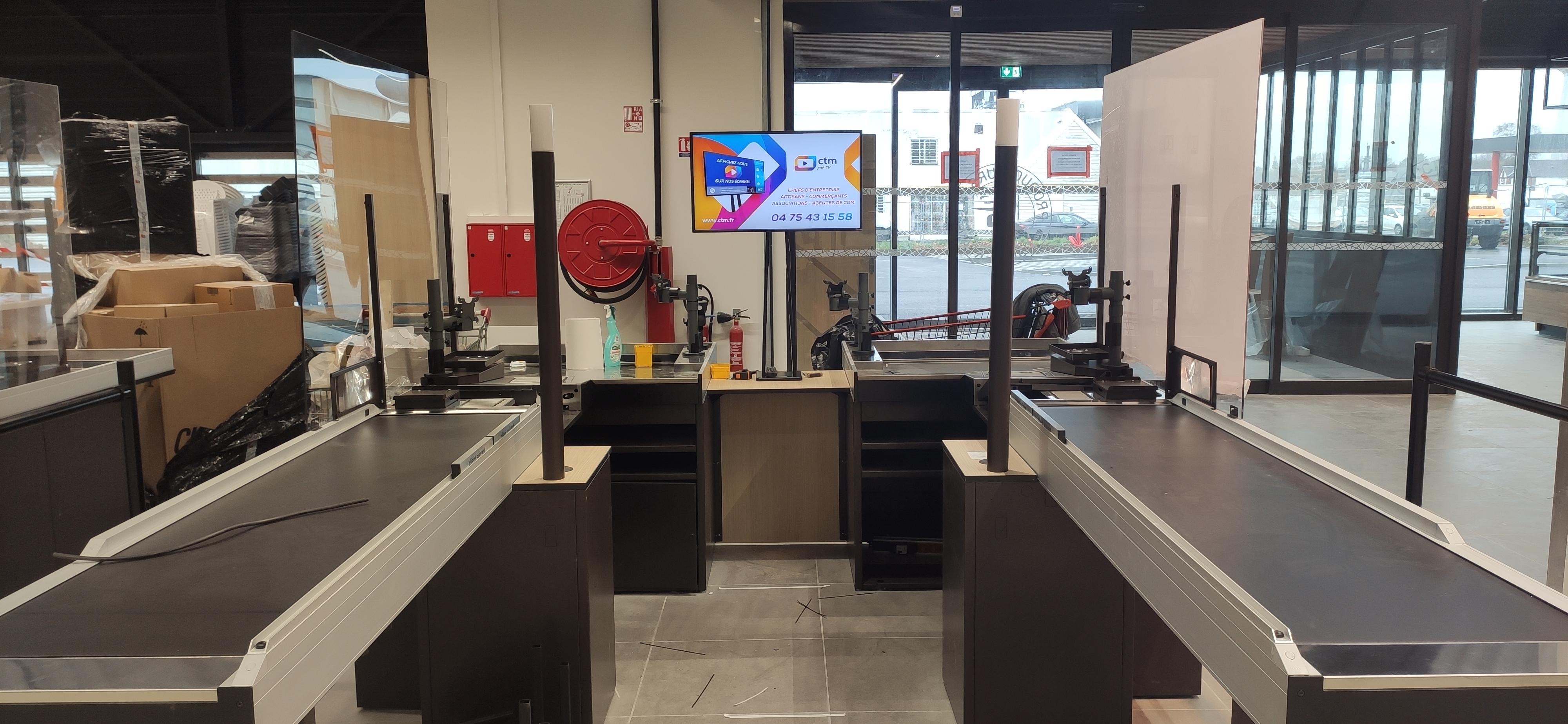
Launching in-store retail media is not simply a matter of making a few screens available to advertisers. The operation combines three distinct areas: retailer communications, technical management of the screen estate and the sale of advertising inventory. When responsibilities are unclear, campaigns can quickly run into late approvals, unsuitable content or broadcasting issues.
The key question is therefore not only which screens to install. Decision-makers must establish who decides, produces, schedules, checks and responds when an incident occurs. A clear operating model protects the store’s priorities while giving the advertising sales team and advertisers a workable framework.
Three complementary professions with distinct responsibilities
The retailer understands its customer journey, operational constraints and promotional calendar. It should retain control over locations, editorial rules and the periods during which store communications take priority. It also decides which advertiser categories and creative materials are compatible with its brand and the context of each location.
The technology operator turns these decisions into a system that can reliably deliver content. Its remit covers screen selection and integration, software, scheduling and estate supervision. SanDisplay digital signage software can be used to create, schedule, distribute and remotely supervise content across a screen estate. This technical layer must make the retailer’s rules practical in daily operation.
The advertising sales house develops the advertiser offer, sells available inventory and coordinates campaigns. In the model presented by ALLSAN, its partnership with CTM Pub TV combines digital signage technology with local advertising sales in supermarkets. Keeping these areas of expertise distinct prevents store employees from being expected to take on an additional profession.
Set the rules before selling advertising inventory
Before the first campaign is accepted, the retailer and its partners need an accurate inventory. Screens do not all have the same audience or purpose. A display at the entrance, in an aisle, in a promotional area or at the checkout is viewed in a particular context. Its role should be determined before it becomes part of an advertising proposition.
- Identify the owner and operational contact for every screen.
- Define the share reserved for store communications and the share available to advertisers.
- Specify accepted formats, durations, times and repetition rules.
- Establish which content categories are permitted, subject to approval or excluded.
- Name the people authorised to approve, schedule or suspend a campaign.
This framework acts as an internal operating agreement, even if it does not formally carry that title. It reduces improvised decisions and gives the sales house sufficiently stable conditions for building proposals. It also helps the technology operator configure access rights, screen groups and broadcasting schedules.
Build a clear campaign workflow
Every campaign should follow a workflow understood by all parties. The sales house gathers the advertiser’s requirements and checks whether they match the available offer. Creative assets are then reviewed against the retailer’s rules and the technical characteristics of the selected screens. Once approved, the content is scheduled for the relevant sites, locations and dates. A final check confirms that the expected distribution is in place.
- Qualify the request by objective, geographical area, stores, dates and viewing context.
- Check advertiser eligibility and the editorial compliance of the message.
- Check the files, their legibility and their suitability for the selected displays.
- Schedule the campaign without overriding priority retailer communications.
- Supervise delivery and apply the agreed procedure if an issue appears.
Plan for exceptions instead of managing emergencies
Normal operation is not enough. A store may need to display urgent information, change a promotion or temporarily withdraw a screen from service. Governance rules should state who can suspend a campaign, in which circumstances and how the other parties are informed. A fallback should also be prepared for rejected media or locations that become unavailable.
The same principle applies to maintenance. The advertising team may notice that a campaign does not appear to be visible, but technical diagnosis belongs to the screen operator. Store employees can contribute valuable local observations. A designated point of contact and an escalation process stop several teams from acting separately on the same incident.
Manage the network with shared indicators
Each party naturally monitors its own priorities, but management should use a common foundation. The retailer watches the consistency of the customer journey and the capacity retained for its own messages. The technology operator monitors estate status and correct execution of schedules. The sales house tracks campaign progress and the availability of sellable inventory.
A useful dashboard distinguishes installed screens, screens available for a campaign, reserved periods and reported issues. The physical presence of a display should not be confused with inventory that is genuinely usable. Rules must reflect the different areas covered by digital signage for supermarkets and specialty retail, because an aisle screen and a checkout screen do not necessarily perform the same role.
Begin with a manageable scope
For the initial launch, it is sensible to select a group of screens whose purpose, contacts and rules are already understood. This first scope can test approvals, media preparation, scheduling and exception management. The aim is not solely to validate the technology; it is also to test cooperation between the different professions.
Once operations are stable, the same framework can be extended to other stores or locations while accommodating local constraints. ALLSAN and CTM Pub TV address this precise connection between digital signage infrastructure and advertising sales. To define responsibilities for your retail media project, contact the ALLSAN team.